MUKTINATH-JOMSOM & TREK
Mustang! An ancient SilkRoad and way into Tibet.
MUKTINATH JOMSOM TREK 09 Days/ 08 Nights










Group size:

Max-Altitude:
Arival On:
Meals:
Accomodations:
Program ID:
Departure From:
Destination:
Fitness Level:
Transport Type:
1-10 people
Kathmandu, Nepal
3,800 m/10,529ft
Breakfast
3-star hotels in Kathmandu and Pokhara; best available hotel during the trek
Private Vehicles/ Domastic Flight
Nepal
Kathmandu, Nepal
Easy
YEN-062

TRIP INTRODUCTION
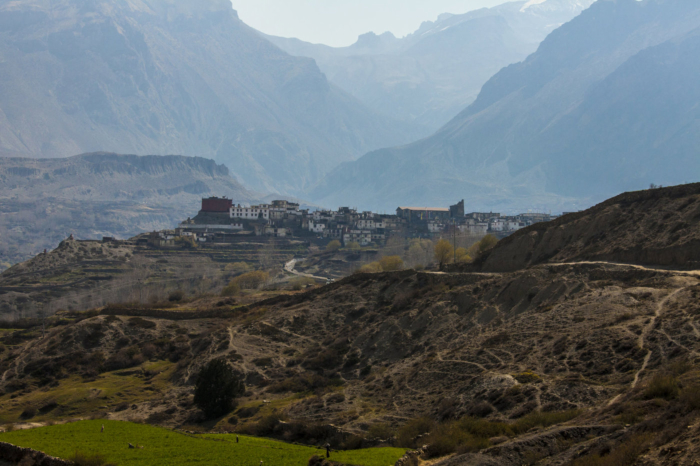
Located on the other side of the Annapurna Himalayan range, geographically Mustang is a part of the Tibetan plateau. it enjoys a mixed culture and lifestyle of Nepal and Tibet. Mustang was an Autonomous kingdom inside the Kingdom of Nepal until 2007 and was isolated from the rest of the world with limited access to outsiders, this political background granted the people of the region an opportunity to preserve their cultural and traditional ancestry. Present days Mustang is open to visitors from all over the world and in no time, it has become one of the greatest attractions for tourists. Our short trek is just an introductory and intended to explore a small portion between Jomsom and Muktinath. Every town and village in this region has its uniqueness and beauty. We drive one way to Muktinath and trek back the other way spending some time in Kagbeni.
DETAIL ITINERARY
DAY 01: Arrival in Kathmandu:
Arrival in Kathmandu the capital city of Nepal (1350M), meeting at the airport, and transfer to hotel.
After a short test, you will be escorted on a day tour to Svayambhunath Stupa located on the top of
the hill. The shrine is over 2000 years old and considered as one of the ancient Buddhist monuments
enlisted in the UNESCO world heritage sites. In the evening we will join dinner in a traditional Nepali
restaurant with live dance and music. Overnight in a Hotel.
DAY 02: Kathmandu Sightseeing:
We began our day tour from an ancient cave named “Asuri Gufa” (Cave) located on a cliff of
mountains about 20 kilometers from the center the cave holds historical importance, as a Tantric
Master “Guru Padmasambhava” in the 7th century meditated here, and it is believed that he
initiated his first visit to Lhasa from here eventually he brought Buddhism to Tibet. We drive back to
Patan “The city of fine art” this medieval town is one of the most beautiful places in terms of art and
architecture. Most of the preserved monuments are built in Nepali-style architecture, also enlisted in
UNESCO world heritage sites. We will then visit “Baudhanath Stupa” built around 5 AD nicknamed
“Little Tibet” which has many ancient legends from Tibet and Nepal says that this stupa was built by
“Guru Padmasambhava” in his previous form of life. It is why this stupa is so very important for
Tibetans living in or outside Nepal. You stay overnight in a hotel.
DAY 03: Drive to Pokhara:
Pokhara is situated at an elevation of 710 meters above sea level and about 200 kilometers northwest
of Kathmandu valley. The road that leads to Pokhara is through many twists and bents, of the
mountains. On arrival, you will check in to the hotel and after a short break go for a boat ride in Fewa
Lake. During winter when the sky is clear the Annapurna range mountain reflects on the lake, with a
spectacular view. We spend about one hour on the boat and the rest of the time you can spend in
Lake Side Street. You stay overnight in a hotel.
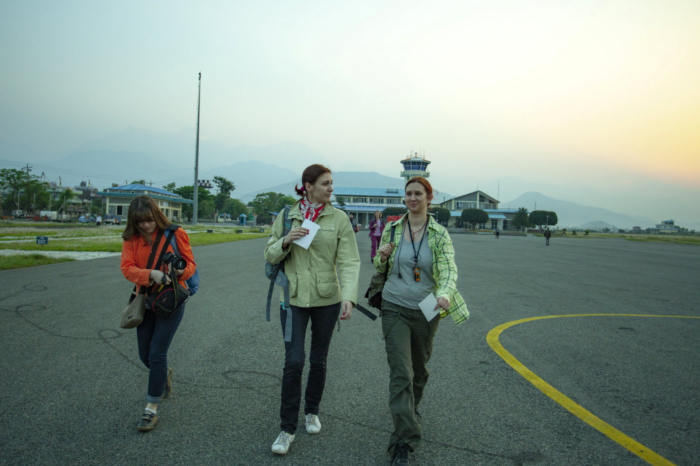
DAY 04: Fly to Jomsom - Altitude 2,743 m (8,999 ft):
Early flight to Jomsom which is about 30 minutes on air, we arrive in Jomsom and have a cup of hot
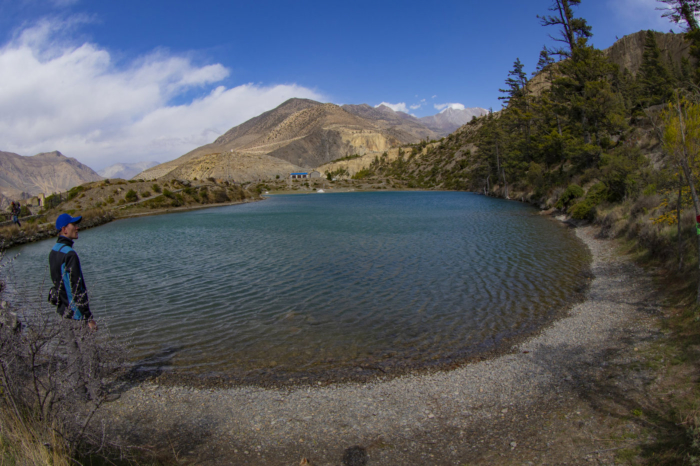
tea and walk to Marpha via a small and beautiful village typically built with flat Tibetan styled roof, we
pass through village upwards to Dhumba lake a small lake with crystal clear water also holds
religious importance among the locals. We walk further upwards to an old monastery built around
10th AD located on the top of the cliff mountain. From here we ascend almost to the Kaligandaki
Riverbank and once we cross the river head further right to Marpha. Marpha is one of the most
amazing towns in the region offers a pleasant stay. We spend time here exploring the monastery,
and other places. We stay overnight in a guest house.
DAY 05: Drive from Marpha to Muktinath (Altitude 3800m):
Early in the morning just after having breakfast, we drive to Muktinath passing Jomsom and
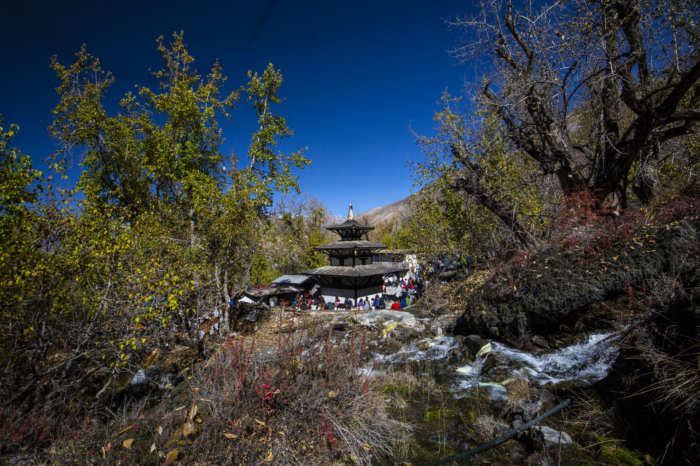
Kagbeni. Muktinath (3800M.) is located on the foot of the Himalayas, just below the Thorung-La pass
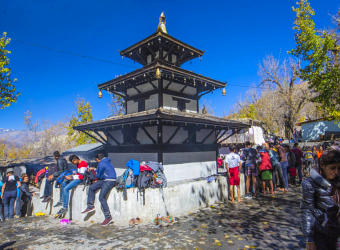
5416M. We will visit a temple dedicated to the Hindu god Vishnu, another most famous temple in
Nepal. Many myths and legends about this temple are found in ancient Hindu literature such as
Vedas and Upanishads. The 108 holy spouts around the temple are said to be so blissful that taking
bath in it can eliminate the sins of all previous lives.
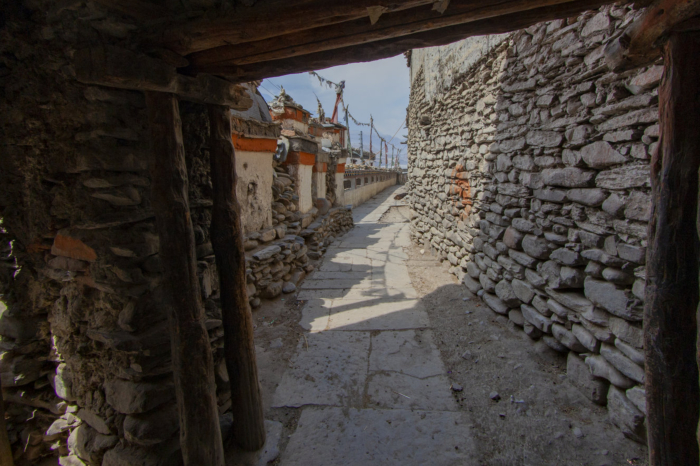
We descend from here gradually through “Jharkot”, an old monastery in town that is the main
attraction of this village. Once we left Jharkot we are heading to Kagbeni on the way we can see
ruins of abandoned caves on the mountain cliffs once used by distance travelers more than two
thousand years ago. These caves are built on the riverside cliffs and some of these caves still contain
evidence of previous life and hardship in the form of Archeological Artifacts. About two hours walk to
Kagbeni where we are about to spend the night but before that, we will have Lunch and an easy
walk-through village, we will also visit Monastery here. You stay overnight in a lodge.
DAY 6: Kagbeni to Jomsom: (Altitude 2170m). 4-5 hours
Breakfast in the guest house and we move slowly to Jomsom through Kaligandaki River. Once we
get to Jomsom we check in to the hotel, and after some rest, we will visit the mountain museum
and spend the rest of the time exploring the town. Overnight in a hotel.
DAY 07: Fly back to Pokhara:
Early flight to Pokhara, on arrival in Pokhara we will continue our sightseeing in the city, evening we
will spend in the lakeside street. You stay overnight in a hotel.
DAY 08: Sarankot hikes and drive to Kathmandu:
Early hike to Sarankot for the sunrise from the viewpoint on an elevation of 1510 M. a majestic sunrise
and breathtaking view of Annapurna range Himalaya. Getting back to the hotel is easy. We have our
breakfast and move slowly to Kathmandu for another five hours to get back to Kathmandu valley. On
arrival check in to the hotel. The rest of the evening is free for last minutes shopping in Thamel.
Overnight in a hotel.
DAY 09: Mountain flight (Optional) fly home:
You can choose to fly on a plane to catch up with Everest and other high Himalayas on the eastern
Himalayan ranges. The flight is about an hour-long takes off from the domestic airport in the valley.
Check out your hotel at Noon, transfer to the airport and fly out from Nepal.


IMPORTANT:
To book the trip required a copy of
passport 2 passport size
photograph for issuing TIMS
(Tourist Information &
Management System) and ACAP
(Annapurna Conservation Area
Project).
Once the Trip has been confirmed
we also need payment of at least
50% of the total amount mostly a
bank transfer. The other half can be
paid before the trip began.
TRIP INFORMATION
THE PRICE INCLUDES:
• Placement in a hotel of category in a double room with a breakfast • A transfer according to the itinerary • Air tickets of Jomsom-Pokhara-Jomsom • Air tickets of Jomsom-Pokhara-Jomsom (for the Mountain guide) • Permit for Annapurna's region (ACAP) • Excursion with the English-speaking guide as per itinerary • All entrance tickets • Boat riding in Fewa Lake in Pokhara (Approx. duration 1 Hour). • A dinner with Nepalese cuisine and national dances in Kathmandu. THE PRICE DOES NOT INCLUDE: • The Nepalese visa (on an arrival at the airport): US$40 on persons (30 days) + 2 photos (3х4) • Sleeping bags and other items for a Trek. • Airport tax internal: US$ 2 on persons per flight (200 rupees) • Lunches and dinners. • All personal expenses and drinks • Tip: to guides, drivers, porters, etc. • All other expenses which aren’t specified in the program • All other expenses are at the unconditional situations connected by natural disasters.
PRE-TRIP ESSENTIALS:
HEALTH: Visit Nepal does not require special vaccination; however, we recommend consulting with
the attending physician and to stock up with necessary drugs before you depart
Medical services in Nepal are limited in mountainous areas. If you wear glasses, it is better to have at
itself spare couple.
MOUNTAIN SICKNESS: Any person traveling above 2500m can get easy symptoms of a mountain
illness. The first signs are headache, increased fatigue, sleeplessness, appetite loss, liquid loss by an
organism, and puffiness. At the emergence of such signs, it is necessary to remain at this height
before full acclimatization of an organism. It is necessary to use from 2nd to 4 liters of liquid a day. If
symptoms don't pass and the state worsens, it is necessary to go down immediately. Sometimes
even 300m can play a crucial role. Planning the travel, leave spare days on acclimatization at height
3700m and 4300m. After 4000m try not to rise more than 500m in one day. You can inadequately
estimate the condition therefore always follow the advice of the accompanying guide or locals.
WEATHER: Weather conditions on the mountain are unpredictable. It might be sunny during the
day and cold as well as windy at night, especially at the high altitudes. Sudden rainstorms or snow
flurries are always a possibility. Better be prepared!
PACKING: Choosing the right clothing for your trip is very important. You always want to pack
everything, but that could make a hassle. Keep in mind that in almost every mountain region in
Nepal the days are warm and nights are cool. Usually, we recommend people bring a warm jacket
either fleece or down, long underwear, and worm shocks. Pair of pants and comfortable boots for
the long day while sports shoes/sandals for hiking or during the less active period. The boots are
another important factor while on trek make sure that they are waterproof. The basic principle of
packing is comfort not luxury. In Kathmandu and Pokhara you can get any necessary gear at a very
comfortable price.
But if you just enquire before you start packing things we provide you better advice depending upon
present weather conditions. Do not pack unnecessary things like hairdryers, lots of and lots of
cosmetics, and electronics, while a battery power bank (Backup) for your mobile phone, iPod is
recommended.
Another important factor is that the porter/support you hire for the trip has a certain limitation of
how much weight he will carry on his back.
THINGS THAT YOU BEAR: Baggage, backpack you give to a porter shouldn't exceed 15 kg. Your small
backpack for day transitions has to be designed for the most necessary way: the camera, water,
additional clothes on a case of rain or a cold snap, cream from suntan, toilet paper, and other
personal accessories if any.
EMERGENCY AND YOUR SUPPORT TEAM: All our guide are well trained in first aid and can handle
most of the basic illness that occurs at high altitude or in the jungle. Every group is equipped with a
basic first aid kit, every traveler must have full travel insurance before coming to Nepal. And should
make available a copy of the policy at our office in Kathmandu. If an emergency occurs, we will
evacuate you from the mountain to one of the internationally recognized hospitals/clinics in
Kathmandu and contact your insurance company.



Just tell us about your preferences, interests and the amount of time available to you and we will
take care of the rest. We will help design a tour and work out a comfortable itinerary that best suits
your needs.
WHY YANTRA TOURS & TRAVEL?
Yantra Tours & Travel is a leading cultural and adventure travel agency in
Nepal. Our tours are thoughtfully designed with great attention to detail,
ensuring authentic experiences and smooth operations. All departures
are guaranteed as scheduled, except in rare cases beyond our control,
such as natural disasters or unforeseen restrictions. Read More…
MUKTINATH JOMSOM TREK 09 Days/ 08 Nights
© 2020
All material on this web site is subject to copyright
and may not be used without permission.
Design and Maintain By Valley FX
Yantra Tours & Travels Pvt. Ltd.
231/85 Anandnagar Marg, Dhumbarahi, Kathmandu, Nepal
+977 1 45 29 595




MUKTINATH-JOMSOM & TREK
Mustang! An ancient SilkRoad and way into Tibet.

Group size:


Max-Altitude:
Arival On:

Meals:
Accomodations:
Program ID:
Departure From:
Destination:
Fitness Level:
Transport Type:
1-10 people
Kathmandu, Nepal
3,800 m/10,529ft
Breakfast
3-star hotels in Kathmandu and Pokhara; best available hotel
during the trek
Private Vehicles/ Domastic Flight
Nepal
Kathmandu, Nepal
Easy
YEN-062
TRIP INTRODUCTION
Located on the other side of the Annapurna Himalayan range, geographically Mustang is a part of the Tibetan plateau. it enjoys a mixed culture and lifestyle of Nepal and Tibet. Mustang was an Autonomous kingdom inside the Kingdom of Nepal until 2007 and was isolated from the rest of the world with limited access to outsiders, this political background granted the people of the region an opportunity to preserve their cultural and traditional ancestry. Present days Mustang is open to visitors from all over the world and in no time, it has become one of the greatest attractions for tourists. Our short trek is just an introductory and intended to explore a small portion between Jomsom and Muktinath. Every town and village in this region has its uniqueness and beauty. We drive one way to Muktinath and trek back the other way spending some time in Kagbeni.
DETAIL ITINERARY
DAY 01: Arrival in Kathmandu:
Arrival in Kathmandu the capital city of Nepal (1350M), meeting at the airport, and transfer
to hotel. After a short test, you will be escorted on a day tour to Svayambhunath Stupa
located on the top of the hill. The shrine is over 2000 years old and considered as one of the
ancient Buddhist monuments enlisted in the UNESCO world heritage sites. In the evening
we will join dinner in a traditional Nepali restaurant with live dance and music. Overnight
in a Hotel.
DAY 02: Kathmandu Sightseeing:
We began our day tour from an ancient cave named “Asuri Gufa” (Cave) located on a cliff of
mountains about 20 kilometers from the center the cave holds historical importance, as a
Tantric Master “Guru Padmasambhava” in the 7th century meditated here, and it is
believed that he initiated his first visit to Lhasa from here eventually he brought Buddhism
to Tibet. We drive back to Patan “The city of fine art” this medieval town is one of the most
beautiful places in terms of art and architecture. Most of the preserved monuments are
built in Nepali-style architecture, also enlisted in UNESCO world heritage sites. We will then
visit “Baudhanath Stupa” built around 5 AD nicknamed “Little Tibet” which has many
ancient legends from Tibet and Nepal says that this stupa was built by “Guru
Padmasambhava” in his previous form of life. It is why this stupa is so very important for
Tibetans living in or outside Nepal. You stay overnight in a hotel.
DAY 03: Drive to Pokhara:
Pokhara is situated at an elevation of 710 meters above sea level and about 200 kilometers
northwest of Kathmandu valley. The road that leads to Pokhara is through many twists and
bents, of the mountains. On arrival, you will check in to the hotel and after a short break go
for a boat ride in Fewa Lake. During winter when the sky is clear the Annapurna range
mountain reflects on the lake, with a spectacular view. We spend about one hour on the
boat and the rest of the time you can spend in Lake Side Street. You stay overnight in a
hotel.
DAY 04: Fly to Jomsom - Altitude 2,743 m (8,999 ft):
Early flight to Jomsom which is about 30 minutes on air, we arrive in Jomsom and have a
cup of hot tea and walk to Marpha via a small and beautiful village typically built with flat
Tibetan styled roof, we pass through village upwards to Dhumba lake a small lake with
crystal clear water also holds religious importance among the locals. We walk further
upwards to an old monastery built around 10th AD located on the top of the cliff mountain.
From here we ascend almost to the Kaligandaki Riverbank and once we cross the river
head further right to Marpha. Marpha is one of the most amazing towns in the region
offers a pleasant stay. We spend time here exploring the monastery, and other places. We
stay overnight in a guest house.
DAY 05: Drive from Marpha to Muktinath (Altitude 3800m):
Early in the morning just after having breakfast, we drive to Muktinath passing Jomsom
and Kagbeni. Muktinath (3800M.) is located on the foot of the Himalayas, just below the
Thorung-La pass 5416M. We will visit a temple dedicated to the Hindu god Vishnu, another
most famous temple in Nepal. Many myths and legends about this temple are found in
ancient Hindu literature such as Vedas and Upanishads. The 108 holy spouts around the
temple are said to be so blissful that taking bath in it can eliminate the sins of all previous
lives.
We descend from here gradually through “Jharkot”, an old monastery in town that is the
main attraction of this village. Once we left Jharkot we are heading to Kagbeni on the way
we can see ruins of abandoned caves on the mountain cliffs once used by distance
travelers more than two thousand years ago. These caves are built on the riverside cliffs
and some of these caves still contain evidence of previous life and hardship in the form of
Archeological Artifacts. About two hours walk to Kagbeni where we are about to spend the
night but before that, we will have Lunch and an easy walk-through village, we will also
visit Monastery here. You stay overnight in a lodge.
DAY 6: Kagbeni to Jomsom: (Altitude 2170m). 4-5 hours
Breakfast in the guest house and we move slowly to Jomsom through Kaligandaki River.
Once we get to Jomsom we check in to the hotel, and after some rest, we will visit the
mountain museum and spend the rest of the time exploring the town. Overnight in a
hotel.
DAY 07: Fly back to Pokhara:
Early flight to Pokhara, on arrival in Pokhara we will continue our sightseeing in the city,
evening we will spend in the lakeside street. You stay overnight in a hotel.
DAY 08: Sarankot hikes and drive to Kathmandu:
Early hike to Sarankot for the sunrise from the viewpoint on an elevation of 1510 M. a
majestic sunrise and breathtaking view of Annapurna range Himalaya. Getting back to the
hotel is easy. We have our breakfast and move slowly to Kathmandu for another five hours
to get back to Kathmandu valley. On arrival check in to the hotel. The rest of the evening is
free for last minutes shopping in Thamel. Overnight in a hotel.
DAY 09: Mountain flight (Optional) fly home:
You can choose to fly on a plane to catch up with Everest and other high Himalayas on the
eastern Himalayan ranges. The flight is about an hour-long takes off from the domestic
airport in the valley.
Check out your hotel at Noon, transfer to the airport and fly out from Nepal.



TRIP INFORMATION
THE PRICE INCLUDES:
• Placement in a hotel of category in a double room with a breakfast • A transfer according to the itinerary • Air tickets of Jomsom-Pokhara-Jomsom • Air tickets of Jomsom-Pokhara-Jomsom (for the Mountain guide) • Permit for Annapurna's region (ACAP) • Excursion with the English-speaking guide as per itinerary • All entrance tickets • Boat riding in Fewa Lake in Pokhara (Approx. duration 1 Hour). • A dinner with Nepalese cuisine and national dances in Kathmandu. THE PRICE DOES NOT INCLUDE: • The Nepalese visa (on an arrival at the airport): US$40 on persons (30 days) + 2 photos (3х4) • Sleeping bags and other items for a Trek. • Airport tax internal: US$ 2 on persons per flight (200 rupees) • Lunches and dinners. • All personal expenses and drinks • Tip: to guides, drivers, porters, etc. • All other expenses which aren’t specified in the program • All other expenses are at the unconditional situations connected by natural disasters.
PRE-TRIP ESSENTIALS:
HEALTH: Visit Nepal does not require special vaccination; however, we recommend
consulting with the attending physician and to stock up with necessary drugs before you
depart
Medical services in Nepal are limited in mountainous areas. If you wear glasses, it is better
to have at itself spare couple.
MOUNTAIN SICKNESS: Any person traveling above 2500m can get easy symptoms of a
mountain illness. The first signs are headache, increased fatigue, sleeplessness, appetite
loss, liquid loss by an organism, and puffiness. At the emergence of such signs, it is
necessary to remain at this height before full acclimatization of an organism. It is necessary
to use from 2nd to 4 liters of liquid a day. If symptoms don't pass and the state worsens, it is
necessary to go down immediately. Sometimes even 300m can play a crucial role.
Planning the travel, leave spare days on acclimatization at height 3700m and 4300m. After
4000m try not to rise more than 500m in one day. You can inadequately estimate the
condition therefore always follow the advice of the accompanying guide or locals.
WEATHER: Weather conditions on the mountain are unpredictable. It might be sunny
during the day and cold as well as windy at night, especially at the high altitudes. Sudden
rainstorms or snow flurries are always a possibility. Better be prepared!
PACKING: Choosing the right clothing for your trip is very important. You always want to
pack everything, but that could make a hassle. Keep in mind that in almost every
mountain region in Nepal the days are warm and nights are cool. Usually, we recommend
people bring a warm jacket either fleece or down, long underwear, and worm shocks. Pair
of pants and comfortable boots for the long day while sports shoes/sandals for hiking or
during the less active period. The boots are another important factor while on trek make
sure that they are waterproof. The basic principle of packing is comfort not luxury. In
Kathmandu and Pokhara you can get any necessary gear at a very comfortable price.
But if you just enquire before you start packing things we provide you better advice
depending upon present weather conditions. Do not pack unnecessary things like
hairdryers, lots of and lots of cosmetics, and electronics, while a battery power bank
(Backup) for your mobile phone, iPod is recommended.
Another important factor is that the porter/support you hire for the trip has a certain
limitation of how much weight he will carry on his back.
THINGS THAT YOU BEAR: Baggage, backpack you give to a porter shouldn't exceed 15 kg.
Your small backpack for day transitions has to be designed for the most necessary way: the
camera, water, additional clothes on a case of rain or a cold snap, cream from suntan, toilet
paper, and other personal accessories if any.
EMERGENCY AND YOUR SUPPORT TEAM: All our guide are well trained in first aid and can
handle most of the basic illness that occurs at high altitude or in the jungle. Every group is
equipped with a basic first aid kit, every traveler must have full travel insurance before
coming to Nepal. And should make available a copy of the policy at our office in
Kathmandu. If an emergency occurs, we will evacuate you from the mountain to one of
the internationally recognized hospitals/clinics in Kathmandu and contact your insurance
company.

Just tell us about your preferences, interests and the amount of time available to you and
we will take care of the rest. We will help design a tour and work out a comfortable
itinerary that best suits your needs.

MUKTINATH JOMSOM
TREK 09 Days/ 08 Nights




© 2020
All material on this web site is subject to copyright and may
not be used without permission.
Design and Maintain By Valley FX
Yantra Tours & Travels Pvt. Ltd.
231/85 Anandnagar Marg, Dhumbarahi,Kathmandu, Nepal
+977 1 44 29 595




MUKTINATH-
JOMSOM & TREK
Mustang! An ancient SilkRoad and way into
Tibet.

Group size:

Max-Altitude:
Arival On:

Meals:
Accomodations:
Program ID:
Departure From:
Destination:
Fitness Level:
Transport Type:
1-10 people
Kathmandu, Nepal
3,800 m/10,529ft
Breakfast
3-star hotels in Kathmandu
and Pokhara; best available
hotel during the trek
Private Vehicles/ Domastic Flight
Nepal
Kathmandu, Nepal
Easy
YEN-062


TRIP INTRODUCTION
Located on the other side of the Annapurna Himalayan range, geographically Mustang is a part of the Tibetan plateau. it enjoys a mixed culture and lifestyle of Nepal and Tibet. Mustang was an Autonomous kingdom inside the Kingdom of Nepal until 2007 and was isolated from the rest of the world with limited access to outsiders, this political background granted the people of the region an opportunity to preserve their cultural and traditional ancestry. Present days Mustang is open to visitors from all over the world and in no time, it has become one of the greatest attractions for tourists. Our short trek is just an introductory and intended to explore a small portion between Jomsom and Muktinath. Every town and village in this region has its uniqueness and beauty. We drive one way to Muktinath and trek back the other way spending some time in Kagbeni.
DETAIL ITINERARY
DAY 01: Arrival in Kathmandu:
Arrival in Kathmandu the capital city of Nepal (1350M),
meeting at the airport, and transfer to hotel. After a
short test, you will be escorted on a day tour to
Svayambhunath Stupa located on the top of the hill.
The shrine is over 2000 years old and considered as
one of the ancient Buddhist monuments enlisted in
the UNESCO world heritage sites. In the evening we
will join dinner in a traditional Nepali restaurant with
live dance and music. Overnight in a Hotel.
DAY 02: Kathmandu Sightseeing:
We began our day tour from an ancient cave named
“Asuri Gufa” (Cave) located on a cliff of mountains
about 20 kilometers from the center the cave holds
historical importance, as a Tantric Master “Guru
Padmasambhava” in the 7th century meditated here,
and it is believed that he initiated his first visit to Lhasa
from here eventually he brought Buddhism to Tibet.
We drive back to Patan “The city of fine art” this
medieval town is one of the most beautiful places in
terms of art and architecture. Most of the preserved
monuments are built in Nepali-style architecture, also
enlisted in UNESCO world heritage sites. We will then
visit “Baudhanath Stupa” built around 5 AD
nicknamed “Little Tibet” which has many ancient
legends from Tibet and Nepal says that this stupa was
built by “Guru Padmasambhava” in his previous form
of life. It is why this stupa is so very important for
Tibetans living in or outside Nepal. You stay overnight
in a hotel.
DAY 03: Drive to Pokhara:
Pokhara is situated at an elevation of 710 meters
above sea level and about 200 kilometers northwest
of Kathmandu valley. The road that leads to Pokhara is
through many twists and bents, of the mountains. On
arrival, you will check in to the hotel and after a short
break go for a boat ride in Fewa Lake. During winter
when the sky is clear the Annapurna range mountain
reflects on the lake, with a spectacular view. We spend
about one hour on the boat and the rest of the time
you can spend in Lake Side Street. You stay overnight
in a hotel.
DAY 04: Fly to Jomsom - Altitude 2,743 m (8,999
ft):
Early flight to Jomsom which is about 30 minutes on
air, we arrive in Jomsom and have a cup of hot tea and
walk to Marpha via a small and beautiful village
typically built with flat Tibetan styled roof, we pass
through village upwards to Dhumba lake a small lake
with crystal clear water also holds religious
importance among the locals. We walk further
upwards to an old monastery built around 10th AD
located on the top of the cliff mountain. From here we
ascend almost to the Kaligandaki Riverbank and once
we cross the river head further right to Marpha.
Marpha is one of the most amazing towns in the
region offers a pleasant stay. We spend time here
exploring the monastery, and other places. We stay
overnight in a guest house.
DAY 05: Drive from Marpha to Muktinath
(Altitude 3800m):
Early in the morning just after having breakfast, we
drive to Muktinath passing Jomsom and Kagbeni.
Muktinath (3800M.) is located on the foot of the
Himalayas, just below the Thorung-La pass 5416M. We
will visit a temple dedicated to the Hindu god Vishnu,
another most famous temple in Nepal. Many myths
and legends about this temple are found in ancient
Hindu literature such as Vedas and Upanishads. The
108 holy spouts around the temple are said to be so
blissful that taking bath in it can eliminate the sins of
all previous lives.
We descend from here gradually through “Jharkot”, an
old monastery in town that is the main attraction of
this village. Once we left Jharkot we are heading to
Kagbeni on the way we can see ruins of abandoned
caves on the mountain cliffs once used by distance
travelers more than two thousand years ago. These
caves are built on the riverside cliffs and some of these
caves still contain evidence of previous life and
hardship in the form of Archeological Artifacts. About
two hours walk to Kagbeni where we are about to
spend the night but before that, we will have Lunch
and an easy walk-through village, we will also visit
Monastery here. You stay overnight in a lodge.
DAY 6: Kagbeni to Jomsom: (Altitude 2170m). 4-5
hours
Breakfast in the guest house and we move slowly to
Jomsom through Kaligandaki River. Once we get to
Jomsom we check in to the hotel, and after some rest,
we will visit the mountain museum and spend the
rest of the time exploring the town. Overnight in a
hotel.
DAY 07: Fly back to Pokhara:
Early flight to Pokhara, on arrival in Pokhara we will
continue our sightseeing in the city, evening we will
spend in the lakeside street. You stay overnight in a
hotel.
DAY 08: Sarankot hikes and drive to
Kathmandu:
Early hike to Sarankot for the sunrise from the
viewpoint on an elevation of 1510 M. a majestic sunrise
and breathtaking view of Annapurna range Himalaya.
Getting back to the hotel is easy. We have our
breakfast and move slowly to Kathmandu for another
five hours to get back to Kathmandu valley. On arrival
check in to the hotel. The rest of the evening is free for
last minutes shopping in Thamel. Overnight in a hotel.
DAY 09: Mountain flight (Optional) fly home:
You can choose to fly on a plane to catch up with
Everest and other high Himalayas on the eastern
Himalayan ranges. The flight is about an hour-long
takes off from the domestic airport in the valley.
Check out your hotel at Noon, transfer to the airport
and fly out from Nepal.


TRIP INFORMATION
THE PRICE INCLUDES:
• Placement in a hotel of category in a double room with a breakfast • A transfer according to the itinerary • Air tickets of Jomsom-Pokhara-Jomsom • Air tickets of Jomsom-Pokhara-Jomsom (for the Mountain guide) • Permit for Annapurna's region (ACAP) • Excursion with the English-speaking guide as per itinerary • All entrance tickets • Boat riding in Fewa Lake in Pokhara (Approx. duration 1 Hour). • A dinner with Nepalese cuisine and national dances in Kathmandu. THE PRICE DOES NOT INCLUDE: • The Nepalese visa (on an arrival at the airport): US$40 on persons (30 days) + 2 photos (3х4) • Sleeping bags and other items for a Trek. • Airport tax internal: US$ 2 on persons per flight (200 rupees) • Lunches and dinners. • All personal expenses and drinks • Tip: to guides, drivers, porters, etc. • All other expenses which aren’t specified in the program • All other expenses are at the unconditional situations connected by natural disasters.
PRE-TRIP ESSENTIALS:
HEALTH: Visit Nepal does not require special
vaccination; however, we recommend consulting with
the attending physician and to stock up with
necessary drugs before you depart
Medical services in Nepal are limited in mountainous
areas. If you wear glasses, it is better to have at itself
spare couple.
MOUNTAIN SICKNESS: Any person traveling above
2500m can get easy symptoms of a mountain illness.
The first signs are headache, increased fatigue,
sleeplessness, appetite loss, liquid loss by an organism,
and puffiness. At the emergence of such signs, it is
necessary to remain at this height before full
acclimatization of an organism. It is necessary to use
from 2nd to 4 liters of liquid a day. If symptoms don't
pass and the state worsens, it is necessary to go down
immediately. Sometimes even 300m can play a
crucial role. Planning the travel, leave spare days on
acclimatization at height 3700m and 4300m. After
4000m try not to rise more than 500m in one day. You
can inadequately estimate the condition therefore
always follow the advice of the accompanying guide
or locals.
WEATHER: Weather conditions on the mountain are
unpredictable. It might be sunny during the day and
cold as well as windy at night, especially at the high
altitudes. Sudden rainstorms or snow flurries are
always a possibility. Better be prepared!
PACKING: Choosing the right clothing for your trip is
very important. You always want to pack everything,
but that could make a hassle. Keep in mind that in
almost every mountain region in Nepal the days are
warm and nights are cool. Usually, we recommend
people bring a warm jacket either fleece or down,
long underwear, and worm shocks. Pair of pants and
comfortable boots for the long day while sports
shoes/sandals for hiking or during the less active
period. The boots are another important factor while
on trek make sure that they are waterproof. The basic
principle of packing is comfort not luxury. In
Kathmandu and Pokhara you can get any necessary
gear at a very comfortable price.
But if you just enquire before you start packing things
we provide you better advice depending upon
present weather conditions. Do not pack unnecessary
things like hairdryers, lots of and lots of cosmetics, and
electronics, while a battery power bank (Backup) for
your mobile phone, iPod is recommended.
Another important factor is that the porter/support
you hire for the trip has a certain limitation of how
much weight he will carry on his back.
THINGS THAT YOU BEAR: Baggage, backpack you
give to a porter shouldn't exceed 15 kg. Your small
backpack for day transitions has to be designed for
the most necessary way: the camera, water, additional
clothes on a case of rain or a cold snap, cream from
suntan, toilet paper, and other personal accessories if
any.
EMERGENCY AND YOUR SUPPORT TEAM: All our
guide are well trained in first aid and can handle most
of the basic illness that occurs at high altitude or in
the jungle. Every group is equipped with a basic first
aid kit, every traveler must have full travel insurance
before coming to Nepal. And should make available a
copy of the policy at our office in Kathmandu. If an
emergency occurs, we will evacuate you from the
mountain to one of the internationally recognized
hospitals/clinics in Kathmandu and contact your
insurance company.

Just tell us about your preferences, interests and the
amount of time available to you and we will take care
of the rest. We will help design a tour and work out a
comfortable itinerary that best suits your needs.